SonarNext by Sonar Technologies International
Rugged mobility and device management from the people who write mobility software
Sonar Technologies International has built enterprise mobility software for transport, logistics, healthcare and manufacturing since 1991. SonarNext puts that experience behind the devices: rugged hardware, MDM, Wi-Fi onboarding, terminal emulation and lifecycle support from one team.
Where we come from
Mobility is not a sideline for us. It is where Sonar started.
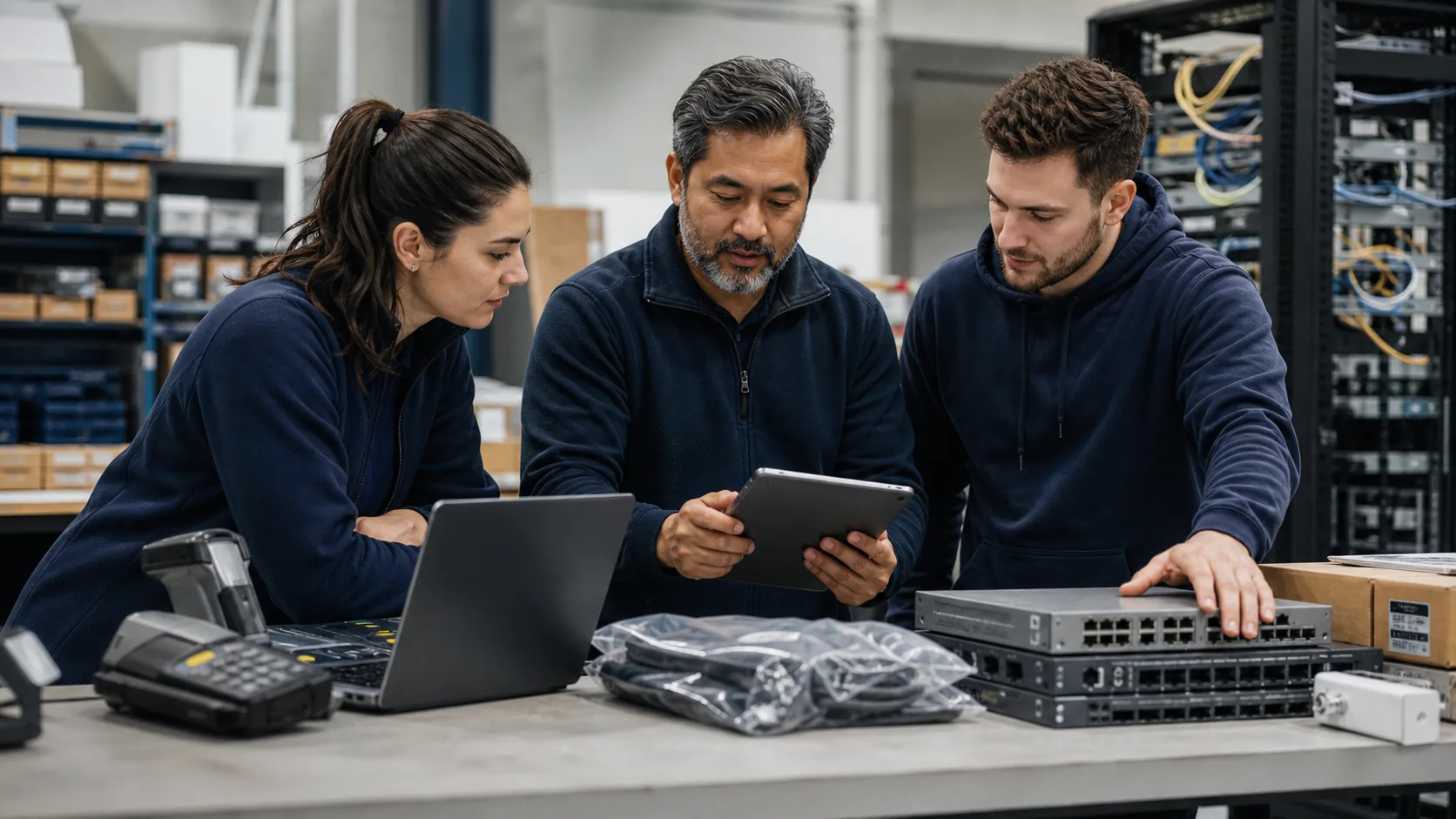
Sonar Technologies International has built enterprise mobility and workflow software for transport, logistics, healthcare and manufacturing since 1991, and more than 200 customers across Australia, New Zealand and Asia run 24/7 operations on it. Our team has spent three decades on the other side of the handheld: writing the applications that run on it, and taking the call when a scanner will not talk to the WMS at 4am.
So we do not start with a spec sheet. We start with the workflow: what gets scanned, at what distance, wearing what gloves, in what temperature, on which network, feeding which system. Device, management platform and Wi-Fi are chosen to fit that and tested together before anything reaches the floor. SonarNext brings that experience to the hardware and infrastructure layer, and works with the Sonar applications team whenever the job reaches into your WMS, ERP or line-of-business software.
- Enterprise mobility software since 1991
- 200+ customers running 24/7 operations
- ISO 9001 certified parent company
- Zebra Technologies and Microsoft partner
- SOTI and Wavelink deployed in live operations for years
- Wi-Fi engineers Ekahau certified, current to Wi-Fi 7
- One team for devices, MDM, Wi-Fi and integration
Rugged hardware
The devices that do the work on the floor
We supply, stage and support the full range of rugged and enterprise mobility hardware. We are a Zebra Technologies partner; we stock Honeywell, Datalogic, Socket Mobile, Brother and Epson, and we support Panasonic TOUGHBOOK fleets.
Mobile computers & rugged tablets
Android touch computers with integrated scan engines, keypad and pistol-grip models for scan-heavy picking, and rugged Android and Windows tablets for yard, dock and field work, including Panasonic TOUGHBOOK. Chosen for battery life, scan range, sealing and how long the vendor will keep issuing security updates, not for the screen.
Vehicle-mount computers
Forklift and vehicle-mount terminals with the mounts, power supplies and keyboards to suit, wired so a truck that goes flat overnight does not take the terminal with it.
Barcode, ring & wearable scanners
Corded and cordless 1D/2D scanners, long-range models for reading rack labels from the forklift, compact Bluetooth scanners for phones and tablets, and wrist-mounted computers with ring scanners for hands-free picking. Pairing is managed centrally, so swapping a ring between shifts takes seconds.
Label printers & RFID
Industrial, desktop and mobile label printers from Zebra, Brother and Epson, plus RFID printer-encoders and readers, with media, calibration and encoding set up so labels come out readable first time.
Pricing, stock and delivery for the hardware itself are handled through IT hardware sales & procurement. For freezer and coolroom work, see cold storage Wi-Fi: freezer-rated devices with heated screens and cold-rated batteries only help if the network reaches them.
Choosing the right device
What we check before recommending a single model
A standard-range engine that reads a carton label at arm's length will not read a top-beam rack label from a forklift seat. We look at the labels you actually have, at the distances your team scans from.
Devices moving between a freezer and an ambient dock fog up inside and out, and touchscreens that work bare-handed can be useless in freezer gloves. Heated screens, cold-rated batteries, keypads, pistol grips and scan triggers matter more on the floor than in a brochure.
Rated battery life is measured under light use; continuous scanning, bright screens and weak Wi-Fi drain it faster. We size batteries, spares and chargers for your longest shift.
A cheap Android device that stops receiving security updates in two years costs more than it saves, so we check the vendor's update commitments against how long you plan to keep the fleet. The WMS, terminal emulation host, label printer and Wi-Fi security settings constrain the choice too: a device that cannot join your network securely is the wrong device, however good the specification.
Mobile device management
Every device enrolled, configured and accountable from one console
A fleet of handhelds without device management is a fleet of individually configured computers, each slowly drifting from the others. The one that keeps dropping off Wi-Fi has an old certificate; the one that cannot print has a different app version; nobody knows which device went home in a van.
We deploy and run SOTI MobiControl, Microsoft Intune and Ivanti (MobileIron), built on Android Enterprise for Android fleets. Devices are enrolled in the mode that fits the job: fully managed for corporate-owned devices, dedicated (COSU) or kiosk mode for shared single-purpose scanners, and a work profile for personal phones where BYOD makes sense, with the personal side kept private and the work side wipeable without touching it. Enrolment is by zero-touch, QR code or NFC tap, or Zebra StageNow barcodes for Zebra fleets, so a new or replaced device configures itself when it is switched on.
- SOTI MobiControl, Microsoft Intune, Ivanti
- Android Enterprise: fully managed, dedicated, work profile
- Zero-touch, QR, NFC and StageNow enrolment
- Windows Autopilot and Intune for laptops and tablets
- Corporate-owned and BYOD policies
- Kiosk and single-app lockdown
Apps, OS & firmware
Line-of-business and store apps packaged and updated on a schedule, so a new version rolls out after the shift ends, not halfway through it. OS and security updates, including Zebra LifeGuard, are tested on a pilot group and released in waves, so an update never lands on the whole fleet untested.
Device settings & remote control
Scanner symbologies, scan triggers, camera access, Wi-Fi profiles and power settings pushed centrally, so every device reads the same barcodes the same way. Attended and unattended remote control, so the helpdesk sees what the user sees without walking out to find the device.
Lock, wipe & compliance
Location, lock and wipe for devices that go missing, so operational and customer data does not leave with them. Compliance rules, conditional access and mobile threat defence where your platform and licensing support it, so an unpatched or compromised device is blocked before it reaches company data.
Wi-Fi, roaming & printing
Devices that stay connected as they move, and printers that just print
Many "faulty scanner" tickets turn out to be network problems. A handheld moving down an aisle, or on a forklift, has to hand over from one access point to the next without dropping its session. If roaming is badly tuned, the device clings to a distant access point, the application times out, and the operator blames the device.
We onboard devices to secure 802.1X Wi-Fi by distributing certificates through the MDM, so every device authenticates individually and a lost unit can be revoked without changing a shared password (see network access control). We then tune roaming on both device and network, and check it by walking the aisles with the devices your team uses. Label printers get the same care: connected to wired or wireless networks, addresses fixed, and tested against the print flows your WMS or ERP actually uses, so the first shift after go-live is not spent chasing a missing shipping label.
- 802.1X certificates delivered by MDM, per-device authentication and revocation
- Roaming tuned on device and network
- Walk-tested with production devices
- Wired and wireless printer onboarding, WMS and ERP print flows tested end to end
Coverage design for racked and refrigerated sites is covered under warehouse networking & wireless.
Terminal emulation
Keep the host system. Give the operator a better screen.
Plenty of warehouses still run a reliable, character-based WMS or ERP written for green-screen terminals. It works, it is paid for, and nobody wants to rewrite it. The problem is the screen: tiny text, function keys and keyboard menus on a touchscreen device held in one hand.
Terminal emulation with screen modernisation, in the style of Wavelink and Ivanti Velocity, presents those host screens as touch-friendly layouts with large buttons and scan fields, without reprogramming the host. The Sonar team has deployed Wavelink in operational environments for years, and we set up sessions so an operator who roams or wakes a device reconnects to where they were, not to a login prompt.
- Touch-friendly screen modernisation, no changes to the host application
- Session persistence across roaming and sleep
- Scan-to-field and keyboard mapping
- Configuration deployed by MDM
Lifecycle
From the day a device is ordered to the day it is destroyed
Rugged fleets usually last longer than laptops, which means the boring parts of their lifecycle — spares, batteries, repairs and refresh — decide what they really cost.
Staging & deployment
Devices are imaged, enrolled, loaded with applications and settings, asset-tagged and burnt in on our bench, then installed with chargers and mounts and tested on site. The people using them are shown how, including what to do when something goes wrong.
Spares, batteries & repair
A spares pool sized to your fleet, battery replacement before capacity fades, and the cradles, holsters, straps and cables that go missing first. We coordinate repairs and warranty claims with the vendor, advise on care plans and service contracts, and send a pre-staged spare out while the faulty unit is away.
Refresh planning
We track device age, battery health and OS support dates, and tell you what needs replacing before a vendor ends security updates. Device-as-a-service and finance options are available through our partners.
Retirement & disposal
Devices are wiped, removed from management and disposed of securely, with data destruction certificates. See secure IT asset disposal.
Integration & ongoing support
Devices, network and applications from one accountable team
A new handheld fleet touches the WMS, the ERP, the printers and the Wi-Fi at once. When those are owned by four suppliers, every fault becomes a conversation about whose problem it is. SonarNext delivers the device, management and network layer, and works alongside the Sonar Technologies International applications team on the business-system side, including integration, API work and upgrades.
Rollouts run to the staged process under implementation & rollout services. Once a fleet is live, device management, monitoring and helpdesk can continue under managed IT services, with coverage hours and response targets agreed in writing up front. We can also take over an existing fleet and MDM platform, whoever set it up.
FAQs
Common questions
Which rugged device brands do you supply and support?
We are a Zebra Technologies partner, and we stock Honeywell, Datalogic, Socket Mobile, Brother and Epson. We also support Panasonic TOUGHBOOK fleets. We recommend the device that fits your workflow, scan distances, temperatures and systems, rather than the one brand we happen to carry.
Which MDM platform should we use?
It depends on what you already run and what the devices do. Microsoft Intune suits organisations already on Microsoft 365, especially for laptops and phones. SOTI MobiControl is strong for shared rugged Android fleets that need deep device-specific control, and we also support Ivanti. We have deployed SOTI in operational environments for years and will tell you plainly if the platform you already own will do the job.
Can you take over an existing fleet and MDM that someone else set up?
Yes. We audit the current platform, enrolment modes, policies, certificates and app deployments, document what is there and fix what is drifting. Where re-enrolment is needed, we plan it by shift or by site so operations are not interrupted.
Our WMS still uses green-screen terminal emulation. Do we have to replace it?
No. Terminal emulation with screen modernisation presents character-based host screens as touch-friendly screens on modern Android devices, without reprogramming the host system. The Sonar team has deployed Wavelink in operational environments for years. It lets you refresh hardware now and decide on the host application separately.
Why do our scanners keep dropping off the Wi-Fi?
Usually it is roaming, coverage at scanning height or certificate problems rather than the device. We check the device Wi-Fi settings and MDM profiles alongside the network itself, then walk the site with your production devices to confirm the fix. If the coverage design is the cause, a warehouse Wi-Fi audit is the right starting point.
Do you support BYOD phones as well as company-owned devices?
Yes. Android Enterprise work profiles and Intune app protection keep work apps and data in a separate managed space, so the business can wipe work data without touching personal photos or messages. Company-owned handhelds are fully managed or locked to dedicated kiosk mode. The policy for each group is agreed with you before enrolment.
What happens when a device breaks or is lost?
Lost devices can be located, locked and wiped through the MDM. For breakages, we coordinate the repair or warranty claim with the vendor and, where you keep a spares pool, a pre-staged replacement enrols itself and is ready to work when it is switched on. Turnaround and support hours are agreed in writing up front.
What happens to devices at the end of their life?
We plan refresh around battery health and the vendor's OS and security update dates, so devices are replaced before they become a risk. Retired devices are wiped, removed from management and disposed of through certified e-waste channels, with data destruction certificates. Trade-in and device-as-a-service options are available through our partners.
Ready to talk through your project?
Tell us what you are planning — a new site, a network that keeps dropping out, or IT that needs a safer pair of hands. We will come back with straight answers and a clear quote.